

Terra Creta
Bij Terra Creta zijn we erg trots op onze olijfbomen en hun vruchten. Ons hele leven draait om deze heilige bomen. Om deze reden verzorgen we ze het hele jaar door, zodat je altijd kunt genieten van het beste wat de vruchtbare olijfgaarden van Kreta te bieden hebben.
We verzamelen het fruit en produceren onze olijfolie binnen een paar uur, in onze eigen olijfoliemolen zodat onze olijfolie zijn versheid behoudt.
De kennis van oude technieken, gecombineerd met de precisie van moderne technologische methoden die we tot onze beschikking hebben, maakt onze Terra Creta olijfolie rijk aan smaak en aroma, en bovendien vol vitaminen en antioxidanten.
Terra Creta Extra Vierge Olijfolie; Geniet van de unieke smaak bij elk gerecht dat je maakt!
De eeuwenoude bomen van Vouves
In het hart van de Middellandse Zee, bij Kolymvari van Chania op Kreta, vlakbij onze particuliere olijfoliemolen, komt de Oude Olijfboom van Vouves, misschien wel de oudste olijfboom ter wereld en een uniek symbool van het Kretenzische land, als een herinnering aan de kracht van de natuur. Ter ere van het erfgoed blijven we olijfoliebomen met respect voor het land kweken.
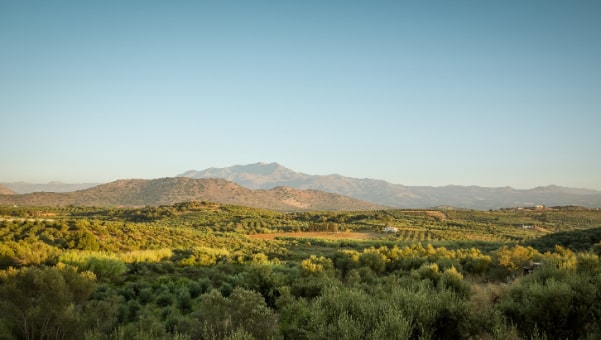
De olijfoliemolen van Terra Creta bevindt zich op het vruchtbare Kretenzische land dat fruit produceert met unieke aroma’s en smaken. Met al onze kennis en ervaring produceren wij onze fijne, extra vierge olijfolie, zodat u altijd kunt genieten van een product met een unieke smaak en uitstekende aroma’s.
Met de garantie van de Terra Creta Olive Academy en de Kretense producenten zetten wij ons in om niet alleen een product van goede kwaliteit te produceren, maar ook van uitzonderlijke kwaliteit!
awards





What is olive oil?
In our daily lives, when we refer to olive oil we mean the oil produced by the olive fruit, which may belong to one of the following quality categories: Extra Virgin Olive Oil, which is the highest quality category, the Virgin Olive Oil, and regular Olive oil or refined oil, which is obtained by blending refined (i.e. processed) olive oil and virgin olive oils.
Olive oils in the first two categories (Extra Virgin and Virgin), are produced only by mechanical or other natural methods, i.e. exclusively by washing and breaking the olives, malaxation, and centrifugation of the olive paste to separate the olive oil, as well as filtering or natural precipitation, without any additions, mixing, or other processing.
What is the best choice of olive oil on the market?
Branded extra virgin olive oil is usually the best choice. It is important that it comes from a reliable producer-processor, so that it is safe and has the content of beneficial ingredients that we expect, as well as its natural flavour and aromas. The label lists useful information on the producer, the variety, and the region where it was produced (if it is PDO or PGI). Another important element is the date of proposed shelf life or ‘Best before end date’, which ensures that the content will retain its high quality and that its organoleptic characteristics will remain unchanged. It is best to opt for glass or metal packaging.
How many kilos of olives are required to produce one kilo of olive oil?
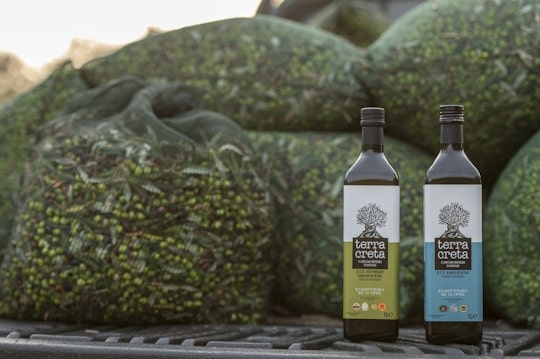
It depends on the variety and the ripeness, but in most cases, it takes five to ten kilos of olives. For the traditional Greek Koroneiki variety, every kilo of extra virgin olive oil requires an average of five and a half kilos of olives.
When is the olive harvesting period? When is the best time for olive oil production and why?
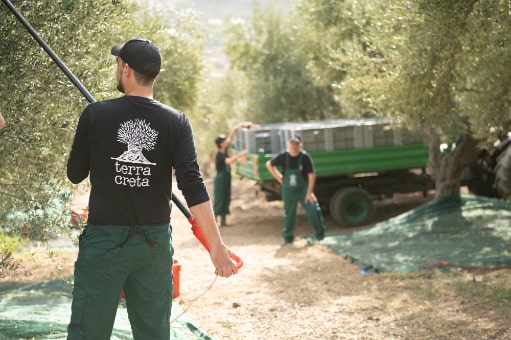
In Greece harvest begins in late September to early October, and is over by February of the following year, depending, mainly, on the variety of olives, the location of the olive grove, and the climate conditions. There are varieties and areas where harvest continues until May. The best harvest period for Greece, depending on the region where the olive grove is located, climate conditions, and the variety, is at some point between October and December, as that is when a good balance between quality and yield is achieved.
The olive oil I am consuming is bitter. Is that normal?
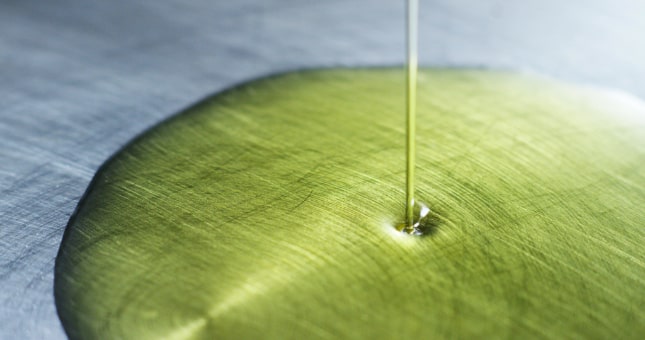
Tasting bitter and pungent are positive attributes that characterise a high-quality extra virgin olive oil2. The intensity of the bitterness is a first indication of the olive oil’s quality. The sense of bitterness is one of the main positive attributes, as it’s existence and intensity are associated with the content of specific components in the olive oil, such as polyphenols. Polyphenols are a complex of ingredients contained in the olives which contribute to the protection of blood lipids from oxidative stress 8.
2 REGULATION (EU) 2022/ 2104
8 This claim may only be used for olive oil containing at least 5 mg of hydroxytyrosol and its derivatives (e.g. oleuropein and tyrosol complex) per 20 g of olive oil. In order to use this claim, the consumer should be informed that the beneficial effects are obtained through a daily intake of 20 g of olive oil.
Can I cook or even fry with extra virgin olive oil?
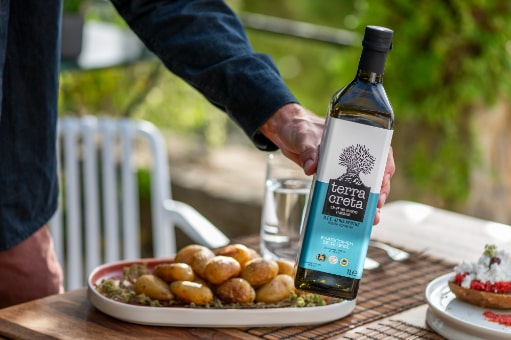
Yes, of course. According to the International Olive Council, even when the Extra virgin olive oil3 is heated, it remains the most stable oil, which means it can withstand extremely high frying temperatures.
3 internationaloliveoil.org
They say olive oil is beneficial. Is that true?
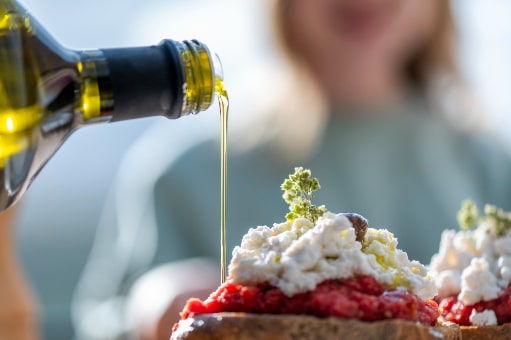
Olive oil, and its highest quality category in particular, extra virgin olive oil, has a plethora of beneficial ingredients, such as mono-unsaturated fatty acids, polyphenols, vitamins, etc. at a very good ratio and excellently balanced, making it particularly beneficial for our health. In the context of a balanced diet and a healthy lifestyle, vitamin E helps protect cells from oxidative stress 9 while replacing the saturated fat in your diet with unsaturated fat, such as oleic acid, helps maintain normal blood cholesterol levels 10
9 The claim may only be used for foods which are at least a source of vitamin E as indicated in the claim SOURCE [NAME OF VITAMIN/S] AND/OR [NAME OF INORGANIC SALT/S], as set out in the Annex to Regulation 1924/2006. 10 The claim may only be used for foods high in unsaturated fatty acid content as mentioned in the claim HIGH IN UNSATURATED FAT CONTENT, as set out in the Annex to Regulation (EC) No 1924/2006
What is the variety of olives that is used to produce Terra Creta olive oil?
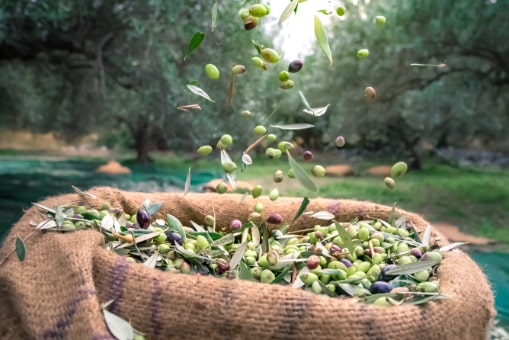
We use selected Koroneiki variety olives, which provide stability to the Extra virgin olive oil’s quality profile, as well as a balanced and pleasant taste.
Why choose glass packaging?
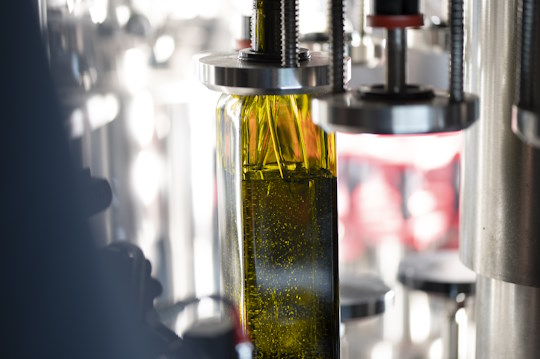
Glass protects Terra Creta’s valuable extra virgin olive oil from oxygen and light more efficiently than plastic packaging, keeping it from interacting with the material itself, thus ensuring its quality.
In how many countries are Terra Creta products exported to?
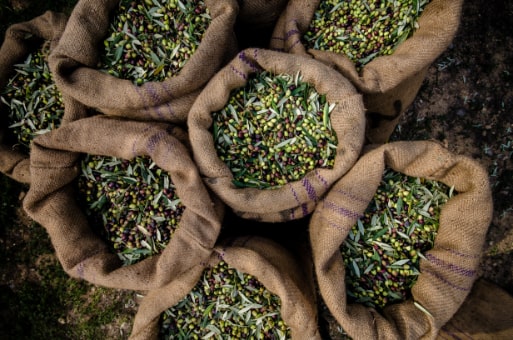
Consumers in 46 countries safely enjoy high quality, stable, and authentic Terra Creta products.
What should we look out for when tasting olive oil?
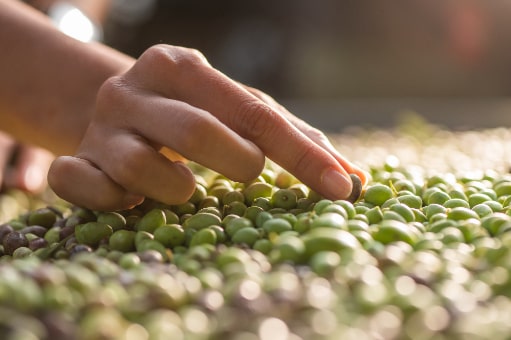
Tasting olive oil is a key criterion in evaluating its quality. The most important organoleptic characteristics found in a high quality Extra Virgin Olive Oil are fruitiness, which represents its aromas, bitterness, and pungency. All three of these characteristics are positive, while their intensity and quality is mainly impacted by the variety, the olive grove location, the ripeness and condition of the olives during harvesting, as well as all the practices implemented during harvesting, pressing, storing, and bottling.